


Rising from the Ashes: The Fire of Cupping, a Ancient Ritual for Modern Revitalization
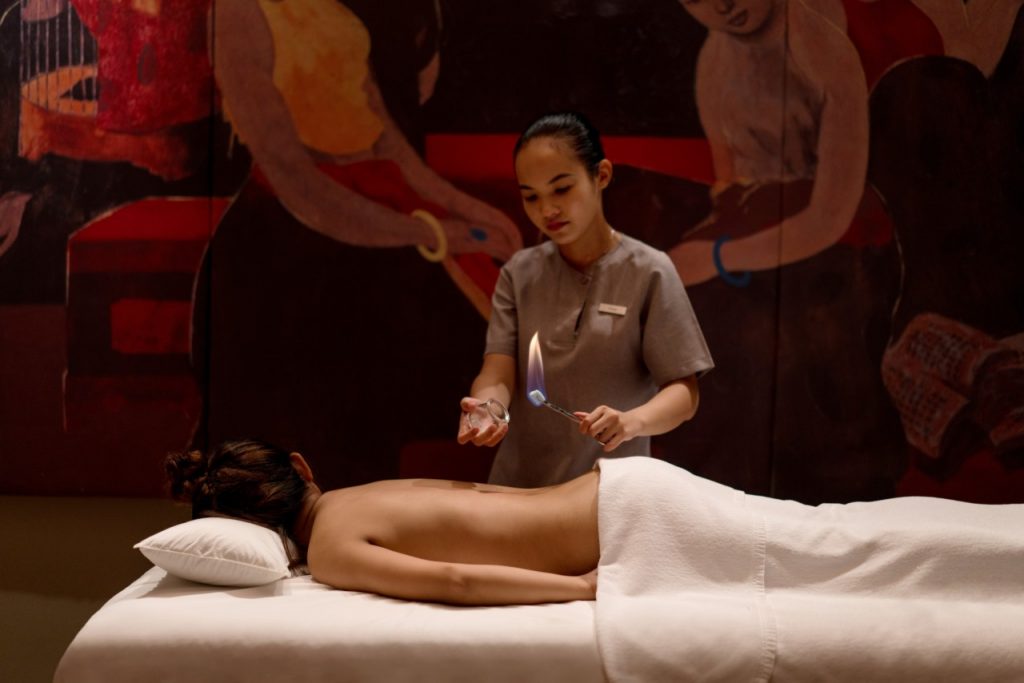
In the hushed, ritualistic confines of a professional wellness sanctuary, where the only lighting often comes from a warm lamp and a dancing flame, a patient ritual unfolds. The image of a therapist, clad in a professional grey tunic, carefully wielding a small, intense blue-and-orange flame is striking. This is not some esoteric magician’s trick; it is the vital, traditional core of fire cupping therapy. In this captivating scene, the therapist is in the process of applying a glass cup, using the flame to consume the oxygen and create the perfect vacuum, which will soon adhere the vessel to the patient’s prone back. This ancient practice, bridging continents and eras, offers a unique path to modern revitalization.
Understanding the Vacuum: The Science and Art of «Reverse Massage»
Fire cupping, or ‘Gua Sha’ cupping (often simplified to ‘Baqin’ in Vietnamese, or ‘Baiching’ in Cambodian, highlighting its regional presence across Southeast Asia), is fundamentally a ‘negative pressure’ therapy. Unlike traditional massage which pushes and kneads into muscle tissue, cupping does the reverse: it gently pulls and lifts the skin and underlying connective tissue (fascia).
This suction serves several therapeutic functions:
-
Myofascial Release: It acts as a powerful myofascial de-cohesion tool, separating layers of tissue that may have become ‘glued’ together from repetitive strain, injury, or chronic tension. This release can dramatically increase flexibility and range of motion.
-
Deep Tissue Circulation: The negative pressure causes localized vasodilation, pulling fresh, nutrient- and oxygen-rich blood into the areas beneath and around the cups. This expedited nutrient delivery is critical for tissue repair.
-
Toxin Release and Lymphatic Drainage: Simultaneously, the process stimulates the lymphatic system, assisting the body in the efficient removal of cellular metabolic waste products and toxins that have pooled in stagnant tissue. This deep detoxification process is often referenced in Traditional Chinese Medicine (TCM) as moving ‘stagnation.’
The Paradox of the Red Marks: Why ‘Bad’ is Good
Following a session, the most visible indicator of treatment are the distinct, circular red or purple marks left behind. To the uninitiated, these can look alarming, resembling bruises. However, in TCM terminology, these marks are often seen not as injury, but as therapeutic ‘sha’ or ‘petechiae’. They indicate the degree of stagnation and are interpreted by the practitioner.
-
A darker mark (dark purple or black) might suggest significant chronic stagnation or even old blood (stasis).
-
A redder, lighter mark might indicate a more recent issue, or a healthier circulatory response.
Unlike actual bruises, which indicate damaged capillaries and can be tender, cupping marks are typically painless and fade over several days, leaving the muscle tissue feeling rejuvenated rather than sore.
A Global Journey to Healing
While often associated primarily with Traditional Chinese Medicine, fire cupping is truly a global phenomenon. Practices that involve negative pressure for healing have been documented across ancient cultures in Egypt, Greece, and parts of the Americas and Oceania. The use of fire is specifically what creates the profound heat and vacuum distinctive to the TCM approach, but variations using horn or bamboo are ancient.
In modern Cambodia (where the current location is specified as Sihanoukville), this practice, alongside others like ‘Kouh Kchal’ (a similar scraping technique using coins or spoons), is a deeply embedded part of traditional folk medicine and modern spa offerings. It is sought after for a wide range of ailments, from specific pain conditions to overall immunity boosting.
Wellness Beyond the Physical
The setting in the image highlights a final crucial component: the ritual. The soft, muted tones, the specialized therapist, and the https://www.blackparkspa.com/ presence of the patient as a passive recipient of care emphasize a surrender to a deeper process. Fire cupping is not merely a quick physiological fix; it is a full-sensory ritual. The contrast between the cold glass, the sudden warmth of the vacuum, and the persistent pull on the skin forces a mental shift. It requires trust, surrender, and presence.
In a world filled with superficial wellness trends, fire cupping stands as a powerful testament to the timeless wisdom of listening to the body and harnessing the primal elements—fire and air—to catalyze its innate capacity for self-healing and profound revitalization.





